
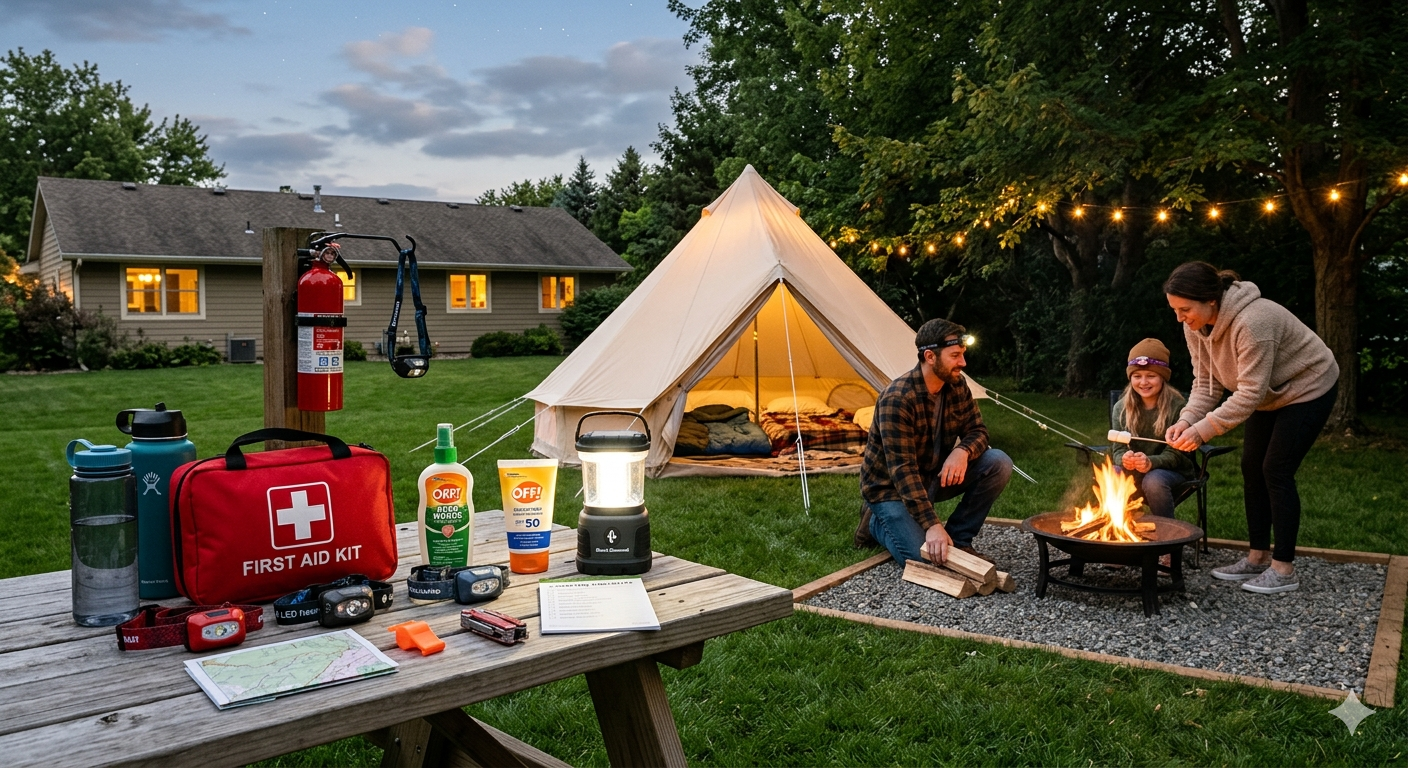
Sleeping under the stars doesn’t require a national park. Your own backyard works just fine — especially for a first try with kids. But even ten feet from your back door, a little preparation goes a long way. Here’s exactly what you need to stay safe and comfortable.
Why Does Safety Matter Even in Your Own Backyard?
Most first-time campers underestimate backyard risks because home feels familiar. But once the sun goes down, temperatures drop, visibility disappears, and kids get disoriented faster than you’d expect. According to the American Academy of Pediatrics, nighttime outdoor injuries in children most commonly involve falls, burns, and insect exposure — all preventable with the right gear.
Think of your safety kit like a car seatbelt. You don’t expect an accident. You just don’t leave without it.
The Core Safety Gear List
You don’t need to spend hundreds of dollars. You need the right items — nothing more.
- Headlamps (one per person) — flashlights require a free hand; headlamps don’t. Get ones with a red-light mode to preserve night vision. A reliable option like the Black Diamond Spot 400 runs about $35 and lasts 200+ hours on a single set of batteries.
- First aid kit — a basic kit from the American Red Cross covers cuts, burns, blisters, and allergic reactions. Keep it in a waterproof bag.
- Insect repellent — use EPA-registered repellents containing DEET (10–30% for children) or picaridin. Apply before dusk, when mosquito activity peaks.
- Weather-appropriate sleeping bag — a bag rated to 20°F below the expected overnight low gives you a real safety margin, not just comfort.
What Kind of Shelter Actually Keeps You Safe?
A tent does more than block rain. It creates a physical barrier against insects, wind, and ground moisture — all of which affect body temperature and sleep quality.
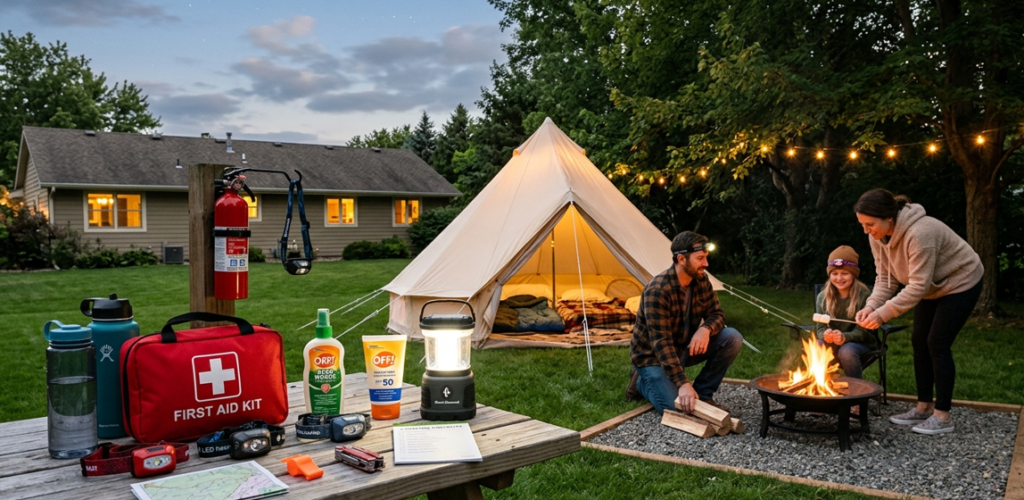
For backyard use, a 3-season tent rated for 30 mph winds is more than enough. Look for a full-coverage rainfly and a bathtub-style floor (where the floor material extends 6–8 inches up the sides). This design prevents water from seeping in during light rain — the same principle as waterproof boots with a high ankle collar.
Avoid: cheap pop-up tents with mesh-only walls. They offer zero wind protection and minimal insulation.
“The single biggest mistake I see new campers make is skipping the tent footprint — a ground cloth placed under the tent. Without it, moisture wicks through the floor within hours, dropping your sleeping temperature by 5–10°F. A $15 tarp cut to size solves this completely.”
Fire Safety: The One Area Where Mistakes Are Costly
If you plan to use a fire pit or camp stove, this section is non-negotiable.
Here’s a simple fire safety sequence to follow every time:
- Clear a 10-foot radius around your fire pit of dry leaves, grass, and debris.
- Keep a bucket of water or a garden hose within arm’s reach before lighting anything.
- Never leave a fire unattended — not even for two minutes.
- Extinguish completely before sleeping: pour water, stir the ashes, pour again until no steam rises.
The U.S. Fire Administration reports that outdoor fires cause over 5,000 residential injuries annually, with the majority happening within 15 feet of a structure. Your house qualifies.
A real scenario: A family in suburban Ohio set up a fire pit 8 feet from a wooden fence for their first backyard campout. A wind gust at 11 p.m. carried an ember onto dry grass. They caught it quickly — but only because they had a hose already connected. That 30-second decision before dark made all the difference.
Comparing Your Two Main Lighting Options
| Feature | Headlamp | Lantern |
| Hands-free use | ✅ Yes | ❌ No |
| Directional light | ✅ Focused beam | ❌ Ambient only |
| Best for kids navigating at night | ✅ Ideal | ⚠️ Limited |
| Camp atmosphere/group lighting | ❌ Poor | ✅ Excellent |
| Battery life (avg.) | 50–200 hours | 20–100 hours |
| Price range | $20–$50 | $15–$60 |
The verdict: Buy both if you can. Use headlamps for movement, lanterns for the campsite. Choosing only a lantern for safety means sacrificing hands-free mobility — a real problem when a child needs to use the bathroom at 2 a.m.
Does Weather Change What You Need?
Yes — significantly. Overnight temperatures in the U.S. vary by 30–40°F depending on region and season, and kids lose body heat roughly 30% faster than adults due to their higher surface-area-to-body-mass ratio.
Check the overnight low on Weather.gov the day before your campout. Then apply this rule: your sleeping bag’s comfort rating should be at least 10°F lower than the forecasted low. A bag rated to 40°F on a 45°F night leaves almost no margin.
“Parents often pack one blanket ‘just in case’ and call it done. Instead, layer your kids in moisture-wicking base layers before they get into the sleeping bag. Cotton holds sweat and cools the body — synthetic or wool base layers don’t. This one change prevents most cases of nighttime chills I’ve seen on family campouts.”
The Backyard Campout Safety Checklist
Run through this before dark:
- Headlamp for every person (batteries tested)
- First aid kit (waterproof bag)
- Insect repellent applied
- Tent with rainfly and ground cloth
- Sleeping bags rated for the overnight low
- Fire extinguished or fire plan confirmed
- Phone charged and inside the tent
- Someone in the house knows you’re outside
One Thing Most Guides Don’t Mention
Communication. Even in your backyard, tell someone inside the house your plan — especially if kids are involved. A simple note on the kitchen counter (“We’re in the backyard tent, back inside by 7 a.m.”) takes ten seconds and eliminates confusion if something unexpected happens overnight.
The goal isn’t to prepare for disaster. It’s to remove the small friction points that turn a fun night into a stressful one. Get the gear right, run the checklist, and enjoy the stars.For more on child-safe insect repellents, see the EPA’s registered repellent search tool. For first aid kit recommendations, visit the American Red Cross.