
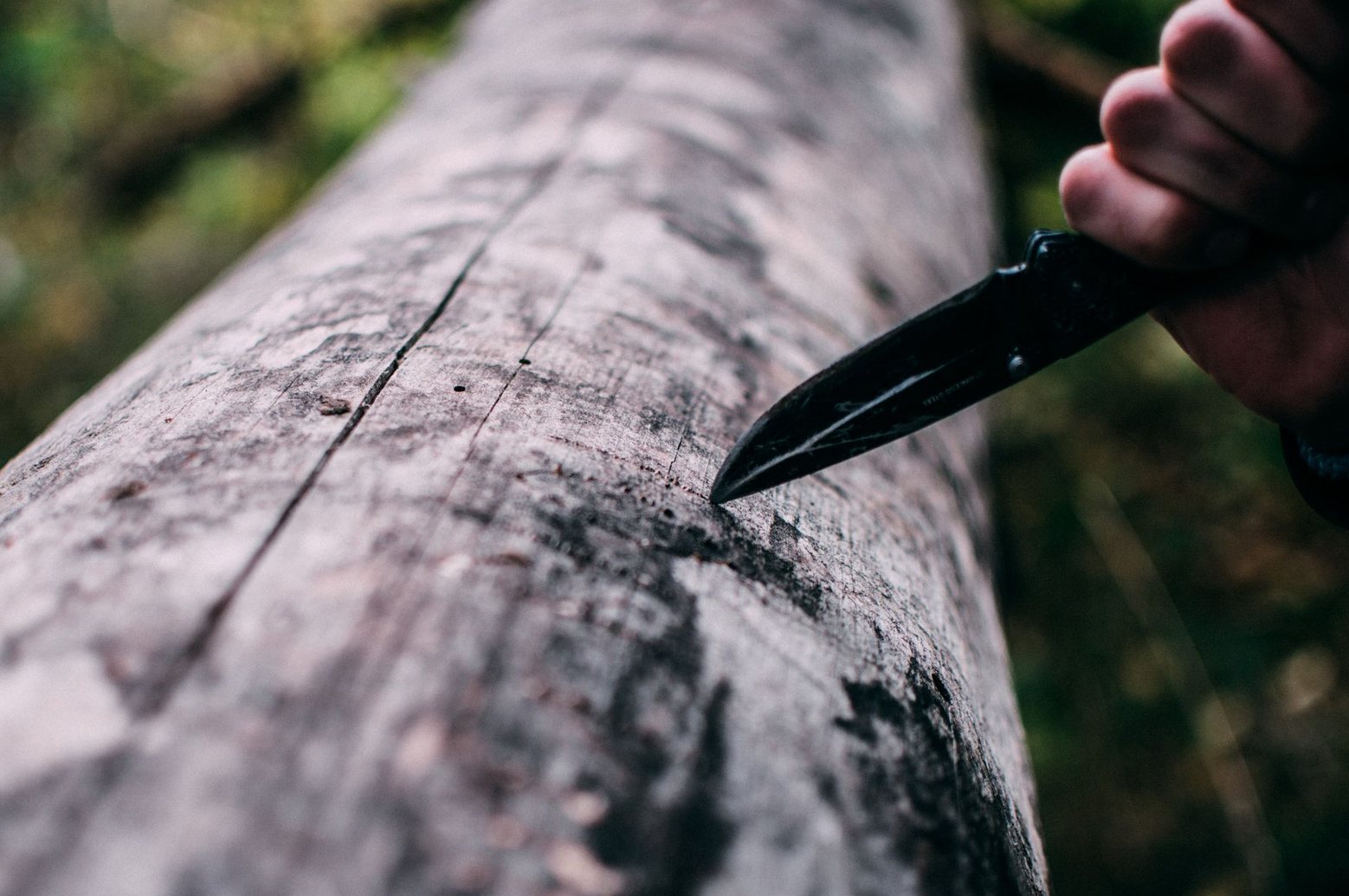
Most kids land somewhere between eight and ten. The number on the birthday cake is the weakest part of that answer.
Scouting America gives a clear benchmark. A Cub Scout has to complete the Whittling adventure as a third grade Bear before using any knife during a Cub Scout activity. That puts the usual starting point at eight or nine years old. It also puts a condition in front of the age, which is the part most parents skip. The knife follows the training, not the birthday.
A backyard campout is the right place to find out where your child actually stands. Nobody is tired, nobody is hungry, the light is good, and the back door is twenty feet away.
Why does a birthday tell you so little?
Two children of the same age can be years apart in impulse control. Age sets the expectation. Behavior sets the date.
Readiness shows up in small, boring moments. A child who puts the scissors down before turning around is telling you something. So is a child who hands you a stick point first, over and over, after being corrected twice. Neither of those has anything to do with how old they are.
There is a second reason to watch behavior instead of the calendar. Hand injuries in children peak later than most parents expect. Work presented at the 2025 American Academy of Orthopaedic Surgeons meeting put the average age for pediatric hand lacerations at around nine, which is exactly the window when many kids get their first blade. The risk does not drop just because a child is old enough to hold the knife properly.
Four signs your child is ready
Readiness is a set of habits, not a feeling. Four of them matter more than the rest.
- They finish a task before moving on. A child who abandons things halfway will abandon a knife halfway, usually open and usually on the grass.
- They accept a correction without arguing. You will correct grip and direction many times in the first hour. If that turns into a negotiation, the lesson is over.
- They already put tools away. If the garden trowel and the flashlight end up back in the bin without a reminder, the habit is there to build on.
- They can sit still for ten minutes. Whittling is slow and repetitive. A child who needs to move every two minutes will get bored, and bored hands get careless.
If three of those four are solid, you are close. We wrote about the single rule that holds all of this together in the Rule of Tools, and it is worth reading before the first session rather than after it.
Teach the blood circle before you teach the cut. The child stands, holds the closed knife at arm’s length, and turns a full slow circle. Anything their arm can reach is too close. Set that boundary once and it does the work of twenty reminders.
Which first knife actually works?
A small folder with a rounded tip is the usual first knife. It fails safely, which matters more than anything else it does.
The instinct to buy something impressive is strong and worth resisting. A heavy blade is harder to control, a long blade reaches further than a child expects, and a sharp point turns a slip into a puncture instead of a scratch. Our comparison of folding and fixed blades covers the mechanics in more depth, but the short version for a first knife is simple. Small, dull tip, easy to close.
| First knife | Why it works for a beginner | The trade-off |
|---|---|---|
| Small folder with a rounded tip | Fits a child’s hand, fails safely on a slip, folds away into a pocket | The hinge is the weak point, and a loose one closes on fingers |
| Dedicated whittling knife | Fixed blade, no hinge to fail, a handle shaped for a long session | Needs a sheath and a place to live, so it is harder to put away properly |
| Small fixed blade from a custom maker | Sized to the hand it was made for, holds an edge through a whole campout | Costs several times more, and a child outgrows the handle in two years |
| A borrowed adult folder | Already in the house, costs nothing | Too long, too sharp at the tip, and the lock is usually stiff for small hands |
Custom knives come up often on a site like this one, so it is worth being plain about where they fit. A handmade blade sized to a child’s grip is a genuinely good tool and a terrible first tool. Save it for the second knife, once the habits have stuck and the hand has stopped growing so fast.
What does the first session look like?
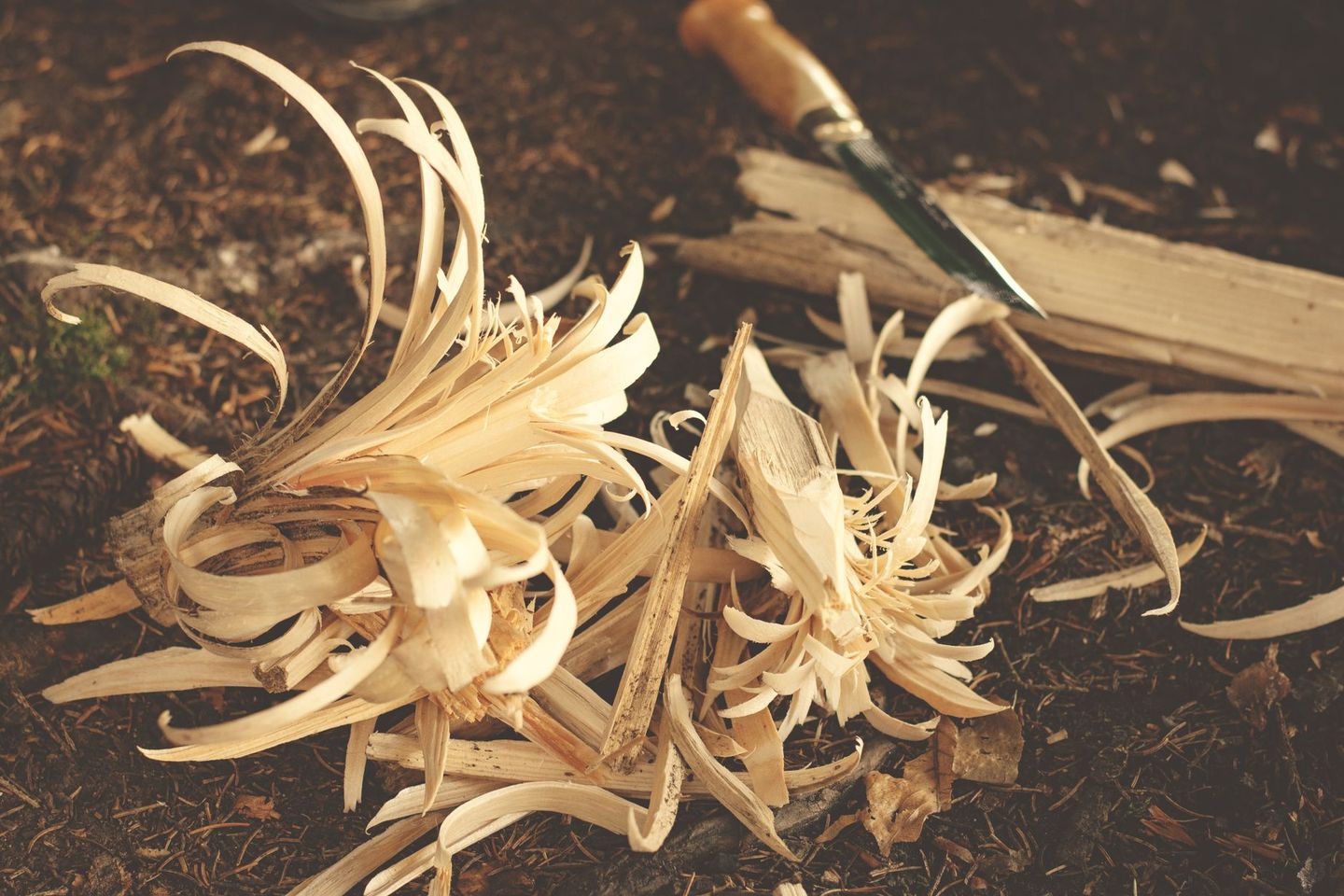
Twenty minutes, one stick, one cut. The goal is a habit, not a carving.
Run it before dinner, not after. Tired children make the mistakes you spend the evening treating. Sit down, both of you, on the ground or on a low bench so nobody is reaching.
- Hand over the closed knife and have them open and close it ten times. Nothing else happens until that is smooth.
- Walk the blood circle. Move the dog, the sibling and the camp chair outside it.
- Show one cut only. Blade moving away from the body, thumb of the free hand behind the work, short strokes.
- Let them make the same cut for ten minutes. Correct grip and direction, ignore the shape of the stick.
- End it while they still want to continue. Closed knife, back in your pocket, not theirs.
The knife going back to the adult at the end is not a punishment, and it helps to say so out loud. Ownership arrives in stages. The first stage is supervised use, and it can last a whole season.
Where do the rules come from?
Scouting America publishes the most widely used framework in the United States, and it is free to read.
The Whittling adventure is required before a third grade Bear may use a knife during a Cub Scout activity. It asks a scout to read the knife safety rules, demonstrate the safety circle, show care and safe use of a pocketknife, and make two carvings. The rules themselves compress into four words that a nine year old can actually hold on to. Stop, away, sharp, store.
There is a second stage. A scout who earned Whittling as a Bear has to earn the Knife Safety adventure as an Arrow of Light scout to keep that privilege. Even inside a structured program, the permission gets renewed rather than granted once. That is a useful model for a family with no program behind it.
Sharp cuts, dull tears. A dull blade needs force, force slips, and a slipping blade under pressure is how most first injuries happen. Keeping a child’s knife sharp feels backwards and is not.
What actually goes wrong?
Not the cutting. The carrying, the horseplay and the handover account for most of it.
A review of United States emergency department data from 1990 to 2008 counted roughly 8.25 million knife related injuries, around 434,000 a year. Lacerations made up 94 percent of them, and fingers and thumbs took the worst of it. The finding that matters for a parent is about context rather than volume. Children in that data were far more likely than adults to be hurt while playing with a knife or during horseplay, with the odds running almost ten times higher. You can read the published analysis in full.
Read that against your own backyard and the lesson is narrow. The danger is not the ten minutes of supervised carving. It is the moment afterward, when the knife is open, the task is finished and a sibling walks past with a water balloon.
How do you store it between campouts?
In your kit, not their room. Access is the thing you are controlling in the first year, and it is easier to control a location than a child.
Keep the knife with the rest of the camp gear rather than in a bedside drawer. It makes the knife part of an activity instead of a possession, and it means the first aid supplies are in the same box. We listed what else belongs in that box in our notes on safety gear for a first backyard campout.
- Closed or sheathed, every time, with no exceptions for a short walk across the yard
- Stored dry, because a folder that sat wet in a pocket will stiffen at the hinge
- Kept with the plasters and the headlamp, so the whole kit moves together
- Checked by you before each session, for a loose hinge or a rolled edge
Somewhere in the second year this stops being a storage question and becomes theirs to manage. There is no test for that moment. You will notice it because the knife is already put away before you thought to ask.
Common questions
Is eight too young for a pocket knife?
Not by itself. Scouting America allows knife use from third grade, which is usually eight or nine, once the Whittling adventure is complete. An eight year old who puts tools away and takes correction calmly is more ready than a ten year old who does neither.
Should a first knife be sharp or dull?
Sharp. A dull blade needs force, and force is what turns a slip into a cut. Keep the edge in good shape and keep the tip rounded.
Does a child need a lock on the blade?
A lock helps, but a smooth hinge helps more. Many first knives are slip joints with no lock, and they are fine as long as the child has practiced opening and closing until it is easy.
Who should keep the knife between sessions?
The adult, for the first season at least. Storing it with the camp gear rather than in a bedroom keeps the knife tied to an activity and keeps the first aid kit in the same place.